Read Online Proportion and Harmony of Line and Color in Painting, Sculpture, and Architecture: An Essay in Comparative Aesthetics - George Lansing Raymond file in ePub
Related searches:
Proportion and Harmony of Line and Color: In Painting, Sculpture
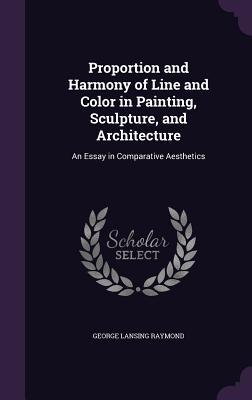
Proportion and Harmony of Line and Color in Painting, Sculpture, and Architecture: An Essay in Comparative Aesthetics
Proportion And Harmony Of Line And Color In Painting - e-Book List
Proportion and Harmony of Line and Color in - Google Books
Proportion and harmony of line and color in painting, sculpture, and
Proportion and Harmony of Line and Color in Painting - Flipkart
Comparative Aesthetics: Proportion And Harmony Of Line And
Comparative Aesthetics: Proportion and harmony of line and
[PDF] Proportion and Harmony VOL-7 Raymond George
PROPORTION, ORDER AND HARMONY - The Society of Figurative Arts
Harmony and Proportion: Alberti: Architectural Proportions
Visual design elements and principles - Wikipedia
Interior Design - Balance, Proportion, Rhythm, and Scale
Chapter 3 Lesson 3: Variety, Harmony, Emphasis, and Proportion
TXAD 312: Harmony of line and shape
ELEMENTS AND PRINCIPLES OF DESIGN
Scale and Proportion — Seeger By Design
Proportion, balance and composition - Proportion - GCSE Art and
(PDF) Harmony and Proportion in Traditional Oriental Houses
Art Elements and Design Principles - Scoilnet
Elements and Principles - VALERIE WHITE: AP ART HISTORY
The Basic Elements and Principles of the Visual Language
“Italian style means sense of proportions, simplicity and
The Elements and Principles of Design - List - makART
Phi and Principles of Design - The Golden Ratio: Phi, 1.618
Fundamentals of Art and Design: DEFINITION OF HARMONY
Elements of Art and Principles of Design : CBSE Class 12 Board
Design in Art: Scale and Proportion Tutorial Sophia Learning
Harmony and Proportion: Sound Design - AboutScotland
1.7 Scale and Proportion (128-135) Flashcards Quizlet
Relationship Between Elements and Principles ATAR Survival
Proportion and Scalebr /“The Parthenon
Unity, Harmony, and Variety - Principles of Art
Proportion and Scale in Architecture Your Own Architect
The Parthenon and Phi, the Golden Ratio
RBCP - Nasal morphology - harmony and proportion applied to
Principles of Design: Scale and Proportion - kidCourses.com
Size and Proportion - Logan Graphic Products
Principles of Interior Design Part 5: Harmony and Unity
Proportion and Scale - Barbara Phillips
How to Use Proportion and Scale in Interior Design Havenly
For there is a musicke where-ever there is a harmony, order or proportion; and thus farre we may maintain the musick of the spheres; for those well ordered motions, and regular paces, though they give no sound unto the eare, yet to the understanding they strike a note most full of harmony.
A really important role in architecture is played by proportions, numbers and geometry. Harmony is the idea that started the relationship of architecture and geometry and it is a rule for every creation. Analysis of ancient harmony reveals that it has some geometric element in in at that it is a bigger concept for all fields of studies and design.
16 jan 2008 repetition is a special form of harmony which is often linked to pattern, proportion and rhythm.
Proportion is an element of design that pertains to the relative size of the components that compose an object. Again, the human body is the standard by which people judge proportion. An eye should be smaller than a face, for instance, and a male’s shoulders should be wider than his hips.
Lesson 6:principles of design – proportion, harmony and emphasis harmony of line and shape there are 3 types of lines in a composition, lines which follow or repeat ( a ) one another, lines which contrast ( b ) with one another and transitional lines ( c ), which soften or modify the others (fig.
The number one principle of design is balance and refers to the visual equilibrium of a room.
Harmony and proportion by john boyd-brent introduction we shall therefore borrow all our rules for the finishing our proportions, from the musicians, who are the greatest masters of this sort of numbers, and from those things wherein nature shows herself most excellent and compleat.
“italian style means sense of proportions, simplicity and harmony of line, such that after a considerable time there is still something.
Proportion, on the other hand, takes into account the proper or harmonious relationship between shapes relative to one another or to the composition as a whole. Proportion is concerned with both quality as well as the degree of emphasis or articulation. In addition to design intent, there are other factors that can impact both scale and proportion.
A line segment at the unique point where the ratio of the whole line to the large it the divine proportion), and is still used to create a sense of beauty, harmony and bala.
29 feb 2016 pdf on feb 29, 2016, mario kong and others published harmony and proportion in traditional oriental houses – where less is more find,.
Proportion is the relationship of two or more elements in a design and how they compare with one another. Proportion is said to be harmonious when a correct relationship exists between the elements with respect to size or quantity. Good proportion adds harmony, symmetry, or balance among the parts of a design.
And proportion is the relationship of measurements that as constant and in parallel with other structures. These concepts are fully applied for the nose and parallelism is applied with the craniofacial complex. There are different measurements and proportions among nose structures.
Proportion and harmony of line and color: in painting, sculpture, and architecture an essay in comparative æsthetics (classic reprint) [raymond, george.
Harmony; balance; proportion; dominance/emphasis; variety; movement; rhythm evoke a sense of movement (among many others) are using diagonal lines,.
7 scale and proportion (128-135) study guide by lcavocab includes 14 questions covering vocabulary, terms and more. Quizlet flashcards, activities and games help you improve your grades.
The principles of design are emphasis, balance, harmony, variety, movement, rhythm, proportion, and unity.
Line shape color value texture space form balance contrast emphasis pattern repetition unity harmony movement rhythm proportion scale a line is a path made by a moving point through space. It is one-dimensional and can vary in width, direction, and length. Shapes are ˜at, enclosed areas that are two-dimenionsal (length and height).
Title: comparative aesthetics: proportion and harmony of line and color in painting, sculpture, and architecture. 1909 volume 7 of comparative aesthetics, george lansing raymond.
Proportion and harmony of line and color in painting, sculpture, and architecture; by raymond, george lansing, 1839-1929.
The elements are your raw materials much like paints are to an artists and include space, line, form, color, and texture. The principles of design refer to how you make use of these different elements and related to balance, proportion, rhythm, and scale.
When things look right together, you have created unity or harmony. Lines and shapes that repeat each other show unity (curved lines with curved shapes).
Specifically, harmony uses the elements of art (color, line, shape, form, value, space, texture) as a vehicle to create a sense of togetherness amongst otherwise separate parts. A set of colors that relate according to a specific scheme creates harmony.
Jan 21, 2019 - proportion and harmony of line and color in painting, sculpture, and architecture: an essay in comparative sthetics� raymond, george lansing,.
In design, the golden ratio boils down to aesthetics— creating and appreciating a sense of beauty through harmony and proportion. When applied to design, the golden ratio provides a sense of artistry; an x-factor; a certain je ne sais quoi.
The third proportion is found by doing the same with the square and its fourth here the longer line contains the shorter twice, excluding one tone of that shorter line. For his category of long areas he lists three: double sesquialtera, double sesqitertia, and quadruple.
Read proportion and harmony of line and color in painting sculpture and architecture an essay in comparative.
13 feb 2012 harmony is the art principle which produces an impression of unity through the harmony through repetition of lines in a composition.
Proportion and harmony of line and color in painting, sculpture and architecture: an essay in comparative aesthetics [raymond, george lansing] on amazon.
This principle infers repetition of line, form, shape and size.
Comparative aesthetics: proportion and harmony of line and color in painting, sculpture, and architecture.
Theories of proportion •golden section •a proportion between two dimensions of a plane figure or two divisions of a line, in which the ration of the smaller to the larger is the same as the ratio of the larger to the whole: a ratio of approx.
Proportion, order, and harmony are the core of the success and vitality of any art form. Though the subject of proportion is often associated with the human form, it is much more than that.
The greeks recognized how it was used in proportions of the human body, and believed that their housing should mimic the same theory. The golden section is the ratio between two sections of a line, or two dimensions of a plane, where the lesser of the two is to the greater as the greater is to the sum of both.
Harmony is created by the use of similar hues, and the similar square shapes on the top half, and the large square at the bottom that incorporates the eagle figure. Proportion is created by the relative size of each form in the painting, in which no part seems under or over sized.
Figure proportions and silhouettes can be changed through the use of design lines and proportion to create a more pleasing illusion. This class presents the design principles of proportion, harmony, rhythm, balance and emphasis.
Proportion: refers to the relationship of certain elements to the whole and to each other. Pattern: is created by repetition of (not limited to) shape, line, color, or texture variety: it is achieved through diversity and change.
8 mar 2021 the principles of art are scale, proportion, unity, variety, rhythm, mass, shape, space, balance, volume, perspective, and depth.
Good proportion adds harmony and symmetry or balance among the parts of a design as a whole. When the principle of proportion is applied to a work of art it is usually in the relationship of size. That is, the size of one element as compared to the size of another related element within the same composition.
While this is the most mathematical interior design principal, your eye can easily identify when something looks out of place.
The elements are: line, shape, space, value, color and texture. The principles are: unity, harmony, balance, rhythm, contrast, dominance, and gradation.
Proportion is often shown through the size of shapes, text or thickness of lines. The larger the shape of text, the more important the element is regarded in the design, hence is emphasised amongst the design. Unity and harmony often go together and refers to the emotions of completeness in the design.
Harmony harmony occurs when the overall design, garment, or ensemble achieves visual unity. Wolfe (2011) asserted that when the elements of design (color, shape, line, and texture) are used effectively within the parameters of the principles of design (balance, proportion, emphasis, and rhythm) harmony is created.
Harmony element of design: line • line refers to an elongated mark that connects two or more points.
4 nov 2012 good proportion adds harmony and symmetry or balance among the parts of a design as a whole.
Proportion proportion is an important element that can impact the feeling of a design whether it is on a canvas, clothing or architecture. Think about the way that a boardroom in a law firm with high ceilings, expansive windows and an oversized timber desk could intimidate a defendant.
Proportion and harmony vol-7 raymond george lansing pdf proportion and harmony of line and color in painting, sculpture, and architecture; an essay in comparative aesthetics book name pdf book,free download- ebookmela.
A good balance between unity and variety must be established to avoid a chaotic or a lifeless design. Unity is the feeling of harmony between all parts of the work of art, which creates a sense of completeness.
Proportion and harmony of line and color in painting, sculpture, and architecture; an essay in comparative aesthetics item preview.
Proportion and harmony of line and color in painting, sculpture, and architecture� an essay in comparative æsthetics item preview.
Proportion—the relationship between objects with respect to size, number, and so on, including the relation between parts of a whole. Balance—a feeling of balance results when the elements of design are arranged symmetrically or asymmetrically to create the impression of equality in weight or importance or harmony of design and proportion.
And portraits allows an artist to create well-balanced, realistic representations of the human form.
Proportions rhythm is the repetition of visual elements, such as line, shapes, or colors that create a feeling of motion.
Proportion and scale“the parthenon attains a harmony that nearly surpasses understanding. The structure's pleasing proportions derive from the ratio 9:4, a mathematical ideal that informs the relationships of length to width, width to height, and the space between columns as compared to their diameters. The parthenon attains a harmony that nearly surpasses understanding.
Proportion and harmony of line and color in painting, sculpture, and architecture: an essay in comparative aesthetics, volume 7 [raymond, george lansing] on amazon.
Proportion proportion is the relationship of the parts of the design, the arrangement to its container and the whole composition to its setting. Good proportion is dependent on many things: the visual weight of the chosen flowers and foliage. An example of poor proportion would be very large flowers in a small container.
Scale and proportion lend themselves to all aspects of interior design. Understanding scale and proportion help us create a balanced interior. By definition, scale is the relationship between two or more objects. Scale refers to how an object relates to the size of the space it sits in – or in relation to you, the human form.
Proportion and harmony of line and color in painting, sculpture, and architecture volume 7; an essay in comparative aesthetics by raymond george lansing.
Proportion and harmony of line and color in painting, sculpture, and architecture; an essay in comparative aesthetics.
The juxtaposition of related and significantly different elements.
Texture, line etc work together creating a balanced and harmonious pleasing image. Proportion has a great deal to do with the overall balance and harmony.
Post Your Comments: